Flavour, explained
A closer look at flavour.
Vapour Notes is an independent UK guide to how e-liquid flavour actually works. We break down flavour families, explain what VG and PG are really doing in your bottle, and help you read a label properly before you buy, written for adult vapers who already vape and want to choose with a bit more confidence.
Flavour families, at a glance
Most UK e-liquid falls into one of five broad families. It's a useful starting map, even though plenty of bottles blend two or three together.
Fruit
From single-note strawberry to layered tropical mixes. The broadest, most varied family in any UK vape shop.
Menthol / Ice
Cooling agents like WS-23 sit on top of a base flavour to give a chilled finish, separate from true menthol.
Dessert / Bakery
Custards, pastries and bakes built from vanilla, cream and biscuit notes. Tends to work best on higher-VG mixes.
Tobacco
Ranges from a plain, dry leaf note through to caramel and RY4-style blends favoured by many ex-smokers.
Beverage
Cola, energy drink and coffee-inspired liquids, usually built around a sharper, PG-forward flavour profile.
Read the full breakdown in our flavour families guide.
Latest from the guides
Three places to start if you're new here.


VG and PG explained: how the ratio changes flavour and throat hit
Vegetable glycerine and propylene glycol do very different jobs in a bottle of e-liquid. Here's how the ratio on the label affects what you actually taste and feel.
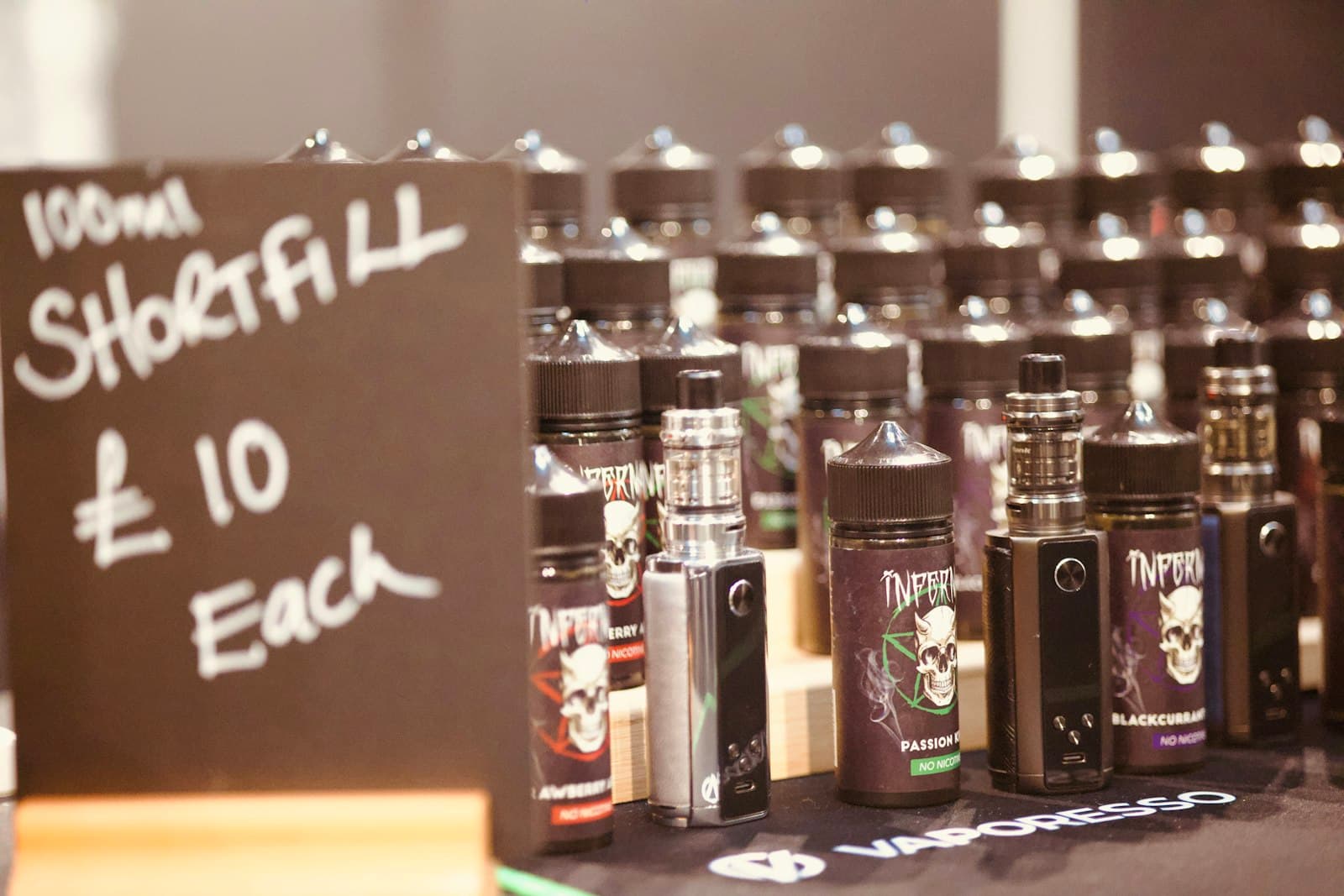
How to read an e-liquid label in the UK
Nicotine strength, VG/PG ratio, batch codes and warning text: a plain walkthrough of what UK-compliant e-liquid packaging has to show, and how to spot the real thing.
“Flavour on a vape label is chemistry, not magic. Once you know what VG, PG and a flavour family are actually doing, picking a bottle you'll enjoy stops being guesswork.”
The Vapour Notes editorial team